
J&L Berkeley Concrete CompanyJ&L Berkeley Concrete Company(510) 345-1330

Concrete contractor in Richmond, CA - driveways and patios that drain right

J&L Berkeley Concrete Company is a Berkeley-based concrete contractor that builds driveways, patios, steps, retaining walls and foundations for homeowners and property owners in Richmond, CA, starting with the ground under the slab.

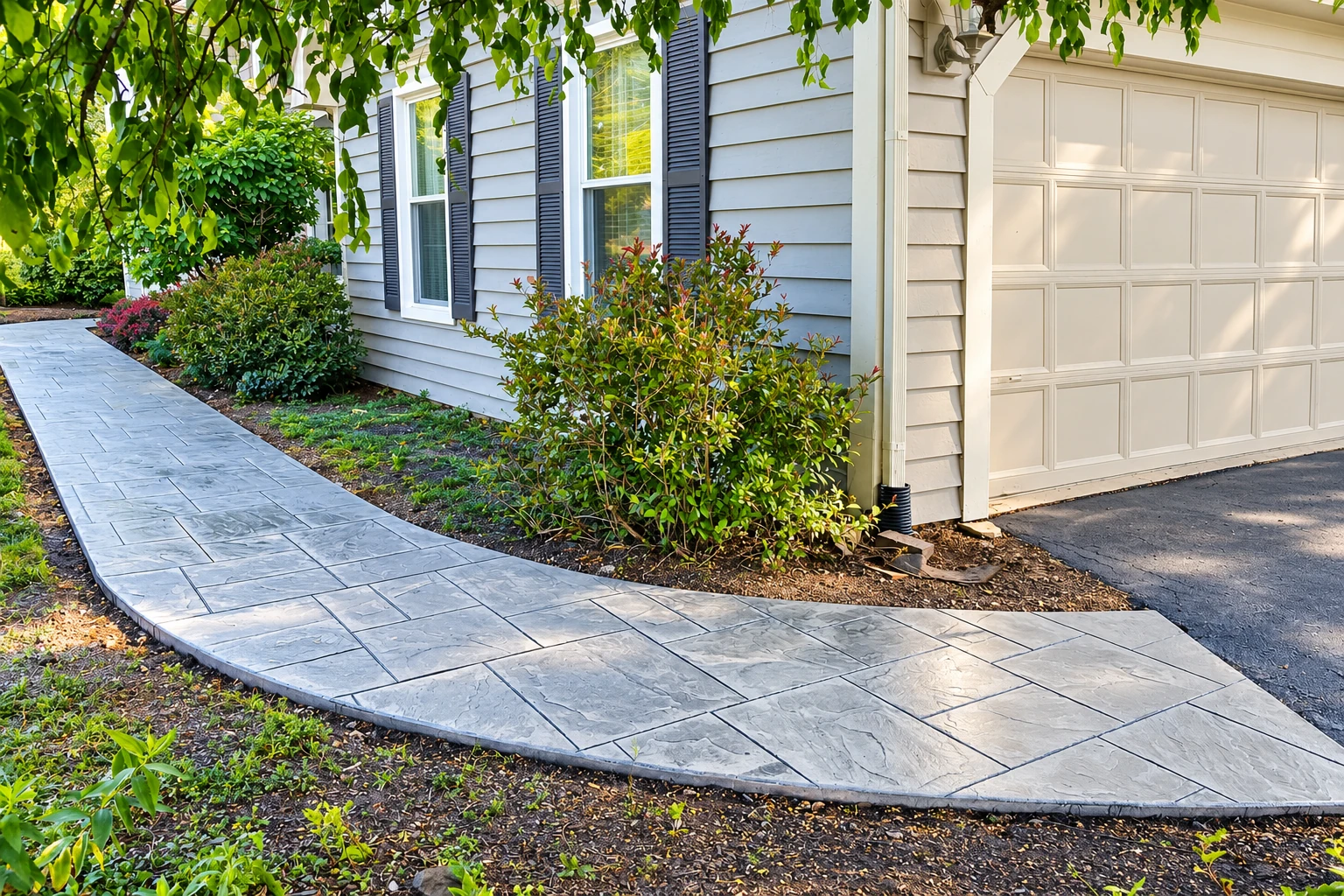
Curved stamped concrete sidewalk runs beside a house, garage and landscaped garden beds.

Richmond homes and the concrete around them

Richmond is a big city that runs from streets of single-family homes out to a long stretch of bay waterfront, and the calls we get here are mostly about the concrete around those homes. Driveways, patios, front steps and foundations come up the most. It's the same work we do in nearby Albany and El Cerrito, and we plan it the same way.

Plenty of the houses we see have older concrete, and old concrete tells you a lot about what's under it. When a slab has sunk or split, the job usually starts below the surface with the base, well before we talk about the new finish.

Concrete services for Richmond homes and properties

We do the full range of concrete work in Richmond, from one set of front steps to a driveway, a foundation or a parking area for a commercial property. Every job starts the same way. I look at what's there now, where the water goes and what's under the old slab before I price anything, because that's where most failures start. Then we plan the base, the slope and the joints around what I found, and the finish comes last.

  • Concrete driveway building

    Older Richmond driveways usually crack and sink where the base under them was never packed. We dig out the soft material, pack a new base and pour a slab sloped away from the garage.

    Explore service
  • Concrete patio construction

    Backyard patios that hold water after rain usually were poured flat or tipped toward the house. We set the slope first so water heads out to the yard.

    Explore service
  • Stamped concrete services

    Homeowners who want a patio or walk that looks like stone or brick often choose stamped concrete. We press the pattern into the fresh surface, add color and seal it when it's cured.

    Explore service
  • Concrete sidewalk building

    Front walks get lifted and broken by tree roots, which makes them a trip hazard. We break out the bad panels, rebuild the base and pour new ones flush with the rest.

    Explore service
  • Garage floor concrete

    Garage floors in older homes are often cracked, stained and out of level after years of cars. We remove the old slab, pack the base and pour a new floor sloped toward the door.

    Explore service
  • Decorative concrete

    Some owners want concrete that looks finished from the street, with color, a pattern or a border. We walk through the options at the estimate so you know the look before the pour.

    Explore service
  • Concrete retaining walls

    Sloped yards often need a wall to hold soil back from a drive or patio. We build walls with footings, steel and drainage behind them, since trapped water pushes walls over.

    Explore service
  • Concrete floor installation

    Basements, shops and additions need an indoor floor flat enough for whatever goes on top. We lay a vapor barrier and steel, then pour and trowel the slab smooth and level.

    Explore service
  • Concrete pool decks

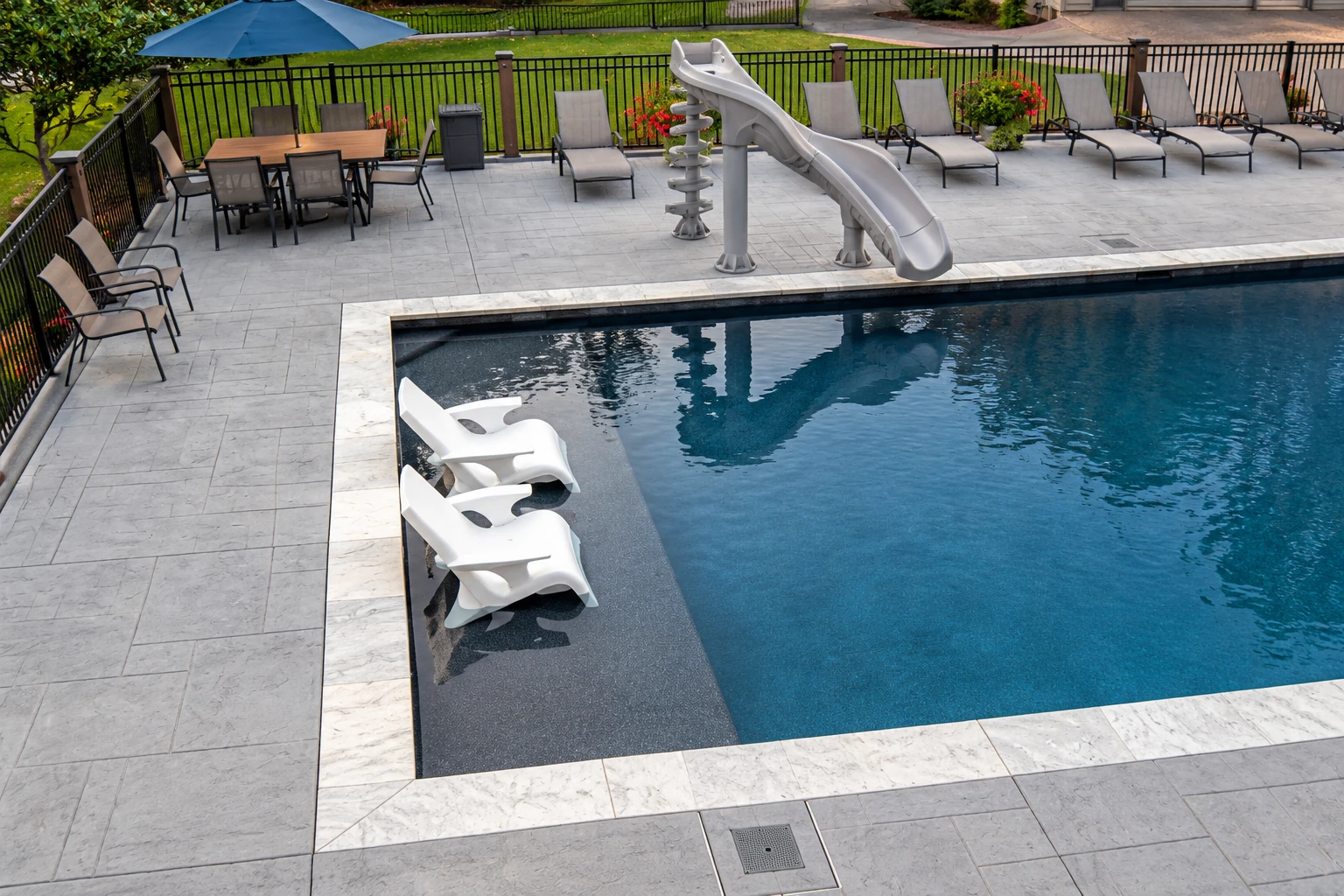
    A pool deck takes splashing, bare feet and chemicals every season, so slick or chipping concrete shows fast. We slope decks away from the pool and finish them with texture that grips wet feet.

    Explore service
  • Concrete steps construction

    Front steps on older houses often settle and pull away from the porch. We form new steps on a proper footing with even risers, so every step feels the same underfoot.

    Explore service
  • Slab foundation building

    New garages, studios and additions often sit on a slab foundation at ground level. We dig and pack the base, thicken the edges, set the steel and pour to your project's drawings.

    Explore service
  • Foundation installation

    Older homes being rebuilt and new builds need a foundation that carries the walls down to firm ground. We dig, form and pour it to the plans, checking the steel before concrete goes in.

    Explore service
  • Concrete parking lot building

    Property owners with a small lot or shared parking see cracks and pooled water spread as it ages. We plan the slope, thickness and joints for the traffic it carries, then pour in sections.

    Explore service
  • Concrete footings

    Decks, posts, walls and small additions all rest on footings, the concrete pads that spread their weight. We dig to the depth the plans call for and set the steel before we pour.

    Explore service
  • Foundation raising

    When part of an older house settles, doors stick and floors start to slope. We look at why it dropped first, then lift and support that section so it carries the house again.

    Explore service
  • Concrete cutting

    Adding a drain, a pipe run or a new doorway often means opening up existing concrete. We saw clean, straight cuts so the patch or new pour meets a neat edge.

    Explore service

What to know before a concrete job in Richmond

Most of what slows a concrete job happens before the truck shows up. Here's how the permit side works in Richmond, and what moves the price and the calendar on your job.

Who issues permits and what to check

In Richmond, building permits come from the city's Building Division, and whether your concrete job needs one is something I check for your address before I price it. That matters for your schedule, because a permit adds an application and inspections to the job, and how much time it adds depends on the size of the work.

When a contractor registers for a permit here, the city asks for a Contractor's State License Card, a workers' comp insurance certificate and a current City of Richmond business license, so those are fair papers to ask any bidder to show you. When a permit applies, we handle the application and set up the inspections with you, so the paperwork isn't yours to chase.

  • Permit steps, if your job has them, go in the estimate up front.
  • Ask what a permit adds to your timeline before you settle on dates.
  • We're licensed and fully insured on every job we take here.

What moves the price and the schedule

The price of a concrete job here turns mostly on what has to come out and what goes under the new slab. Breaking out and hauling old concrete, digging out and packing the base, the slab's thickness, the steel and the finish all move the number, and so does access, since pumping or wheeling concrete down a side yard takes longer than a truck at the curb.

Your schedule turns on the permit if one applies, the weather on pour day and curing, the wait while new concrete gains enough strength to walk on and later to drive on. You'll be off a new driveway longer than off a patio. Your own figure comes in writing after I've walked the job, and we can talk timing while I'm there.

  • A driveway usually needs a thicker slab and more steel than a patio.
  • Stamping and color add cost and time to any job.
  • Breaking out old concrete costs more than pouring on open ground.

Get a free on-site concrete estimate in Richmond

Tell us about your Richmond project with the form or at (510) 345-1330, and we'll reply within one business day to set up a visit. I come out myself to look at the job and give you a free written estimate at your property, with no pressure to book.

(510) 345-1330

What we run into on Richmond driveways and yards

Most of the problems we're called about here started under the slab or with the water around it. These are the things I look for on a Richmond property before I price a job.

  • Old slabs with no real base

    A lot of the older driveways and walks we break out were poured on raked dirt, not a dug-out, packed base, which is why they sank. The subgrade, the ground the slab sits on, is the first thing we fix, because a new slab on the same soft dirt settles the same way.

  • Water running toward the house

    Slabs that tip toward a foundation or garage door send rain right where you don't want it, and pooling by the back steps usually means nobody checked the slope. We look at where water runs across the lot before we set forms and pitch the new concrete away from the house.

  • Cracks in places nobody chose

    Concrete shrinks as it dries, so nearly every slab cracks somewhere. Control joints, the straight grooves cut into the surface, give it a planned place to do that. The wandering cracks on old driveways usually come from joints cut late or skipped, so we plan ours before the pour.

  • Chipping, dusty tops

    Old patios and drives that chip or turn dusty on top usually got a weak surface on pour day, from midday heat or water worked into the finish. We plan pours for cooler hours when we can, and on drives and walks we use a broom finish, a brushed texture that gives grip.

  • Bigger lots and shared walks

    Some calls come from property owners with bigger flatwork, our word for flat concrete at ground level, like a parking area or a long shared walk. We size the thickness and the steel for the heaviest vehicle that will use it, because that's where wear shows first.

How we run a concrete job from first visit to cleanup

I learned this trade on an East Bay concrete crew after years at a desk. How we work now comes from what that crew taught me about where concrete jobs go wrong.

We put the money into the base first

If a budget has to give somewhere, I'd rather it give on the finish than on the base. The base is the packed layer under the slab, and nobody sees it once the concrete's down, which is why it's the first thing people want to cut. A plain slab on a good base holds up. A fancy one on loose dirt sinks like the one you're replacing.

Think of it like painting a house that's sitting crooked. The color doesn't matter if it's still crooked. So I'll show you what's under the old slab, explain what we'd dig out and replace, and only then talk about color or stamping. A nicer surface can usually be added later, but a bad base means tearing everything out and starting over.

  • I look at every job myself

    I come out myself to look at every job and give the estimate, so the person who prices your job is the one running it. Our crew does the forming, pouring and finishing with me on the job, so what we talked over is what gets built.

  • A written estimate you can compare

    Your estimate comes in writing, with the base work, the thickness and the finish spelled out. That way you can set it beside other bids and see whether everyone is pricing the same job, which is where a lot of low numbers fall apart.

  • Straight talk about cracking

    Nobody can honestly promise a slab that never cracks, so I won't. What we do is pack the base, add rebar, the steel bars that keep cracked pieces from spreading apart, and cut the joints so cracks land where we planned them.

  • In business since 2017

    We've been in business since 2017, working in Berkeley and the cities around it across the East Bay. Your satisfaction, guaranteed. When you're ready, call (510) 345-1330 or send the form on this page and tell me what you've got.

Questions Richmond homeowners ask about permits and concrete work

Most of the questions we hear in Richmond are about permits and price. Here's what the city's own guidance says, and how we handle each part on our jobs.

Do I need a permit for a concrete driveway or patio in Richmond, CA?

Check first, because the city's list of work exempt from permits says a permit is likely required for every project except the ones it lists. The city requires a building permit before anyone builds, enlarges, alters, repairs or demolishes a building or structure, and the examples on that list include small one-story sheds and finish work like painting and tile, so don't assume your concrete job is on it.

How do I apply for a building permit in Richmond, CA?

You apply electronically, and if you can't submit that way, the city takes applications in person by appointment. The city's page on obtaining permits is the place to start, and on jobs we take, we handle the application for you.

Who can pull a building permit in Richmond, CA?

Only property owners or their authorized agents and licensed contractors can be issued a permit in Richmond. A contractor also has to show the license, workers' comp and city business license papers mentioned above when registering, so one without them can't register for your job.

How long does it take to get a building permit in Richmond?

Smaller jobs can be quick, because the city says most single-trade permits and home remodels that need no drawings are issued once it receives and verifies the application documents. Anything bigger depends on its scope, and I'll tell you which side your project likely falls on when I come out.

How much does a new concrete driveway cost in Richmond, CA?

It's priced job by job, because the biggest part of the cost is often what's under the old slab, and that only shows once I'm on site. When two bids for the same driveway are far apart, the gap is usually in the base work, so compare what each one says about digging out and packing the ground before you pick.

What if part of my house or patio in Richmond was built without a permit?

Ask the city first, because Richmond's building code includes a local provision for legalizing residential construction. If we're building onto or right next to that work, it helps to know where it stands before we price the job, so nothing about your new slab is waiting on an old question.

Service areas

We're based in Berkeley and work in the cities around it across the East Bay, including the ones listed here. If your city isn't on the list, call (510) 345-1330 and ask, since these pages aren't everywhere we go.

Ask about your location
(510) 345-1330Get an estimate