
J&L Berkeley Concrete CompanyJ&L Berkeley Concrete Company(510) 345-1330

Concrete contractor in El Cerrito, CA - slabs and steps for flat and sloped lots

J&L Berkeley Concrete Company is a concrete contractor based in Berkeley, CA, building driveways, patios, steps, retaining walls and foundations for homes and property owners in El Cerrito, and we explain every job before we pour.

Concrete pool deck surrounds a blue swimming pool beside a lit house and covered outdoor seating area at dusk.

How El Cerrito's streets and lots shape a concrete job

El Cerrito runs from flat blocks near San Pablo Avenue, where shops and apartment buildings sit close to the street, up to houses on streets that climb into the hills. Most of our calls, here and across the East Bay, come from homeowners with a driveway, patio, steps or foundation question, and we do the same kind of work next door in Albany and Kensington.

The ground decides a lot of the job here. On the flat blocks the questions are usually tight access and where the water goes, and higher up a driveway or a set of steps has to work with the slope, so I look at how the lot falls before we talk about finishes.

Concrete work we do on El Cerrito properties

We handle the full range of concrete work in El Cerrito, from a cracked front walk to a new garage slab or a foundation repair. Every job starts the same way, with me on site looking at the ground under the old concrete, where the water runs and how a truck gets in. Then our crew forms, pours and finishes it with me running the job, and you'll know the plan before we pour.

  • Concrete driveway building

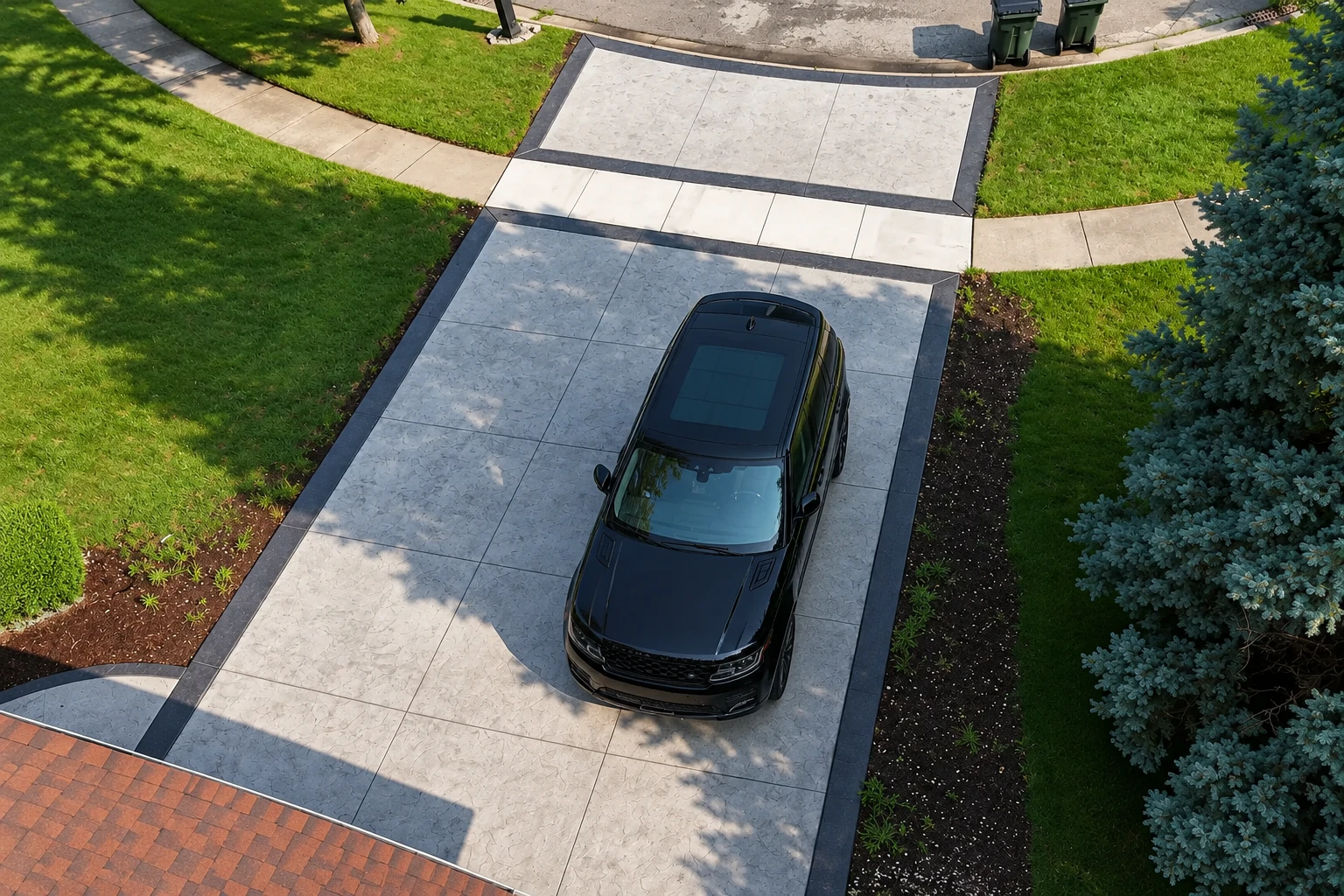
    A driveway carries your car every day, so it needs more thickness and steel than a walk. We pour it with rebar, steel bars that hold the slab together if it cracks.

    Explore service
  • Concrete patio construction

    A patio is often the one level spot in a sloped backyard, and the downhill edge usually settles first. We dig out and pack the base well on that side before forming.

    Explore service
  • Stamped concrete services

    Stamped concrete fits a patio or front entry when you want a stone look without loose pavers shifting. We press the pattern while the top is still soft and seal it once it cures.

    Explore service
  • Concrete sidewalk building

    Front walks lifted by tree roots turn into trip edges fast. We take out the broken panels, rebuild the base and cut control joints, grooves that give cracks a planned place to go.

    Explore service
  • Garage floor concrete

    Garage floors in older houses are often thin, pitted and cracked from a corner. We break out the old floor, pack the base and pour a new slab finished smooth so it sweeps clean.

    Explore service
  • Decorative concrete

    Some homeowners want color or an exposed stone finish on a front walk or patio. We go over samples with you first, because a finish is hard to change once it's poured.

    Explore service
  • Concrete retaining walls

    On a sloped lot, a wall holds back the hill so the yard or driveway gets level ground. We pour a footing under it, add steel and leave water a way out behind it.

    Explore service
  • Concrete floor installation

    Basements and workshops under older houses often have dirt or broken concrete where a floor should be. We grade and pack the ground, then pour and finish a level floor.

    Explore service
  • Concrete pool decks

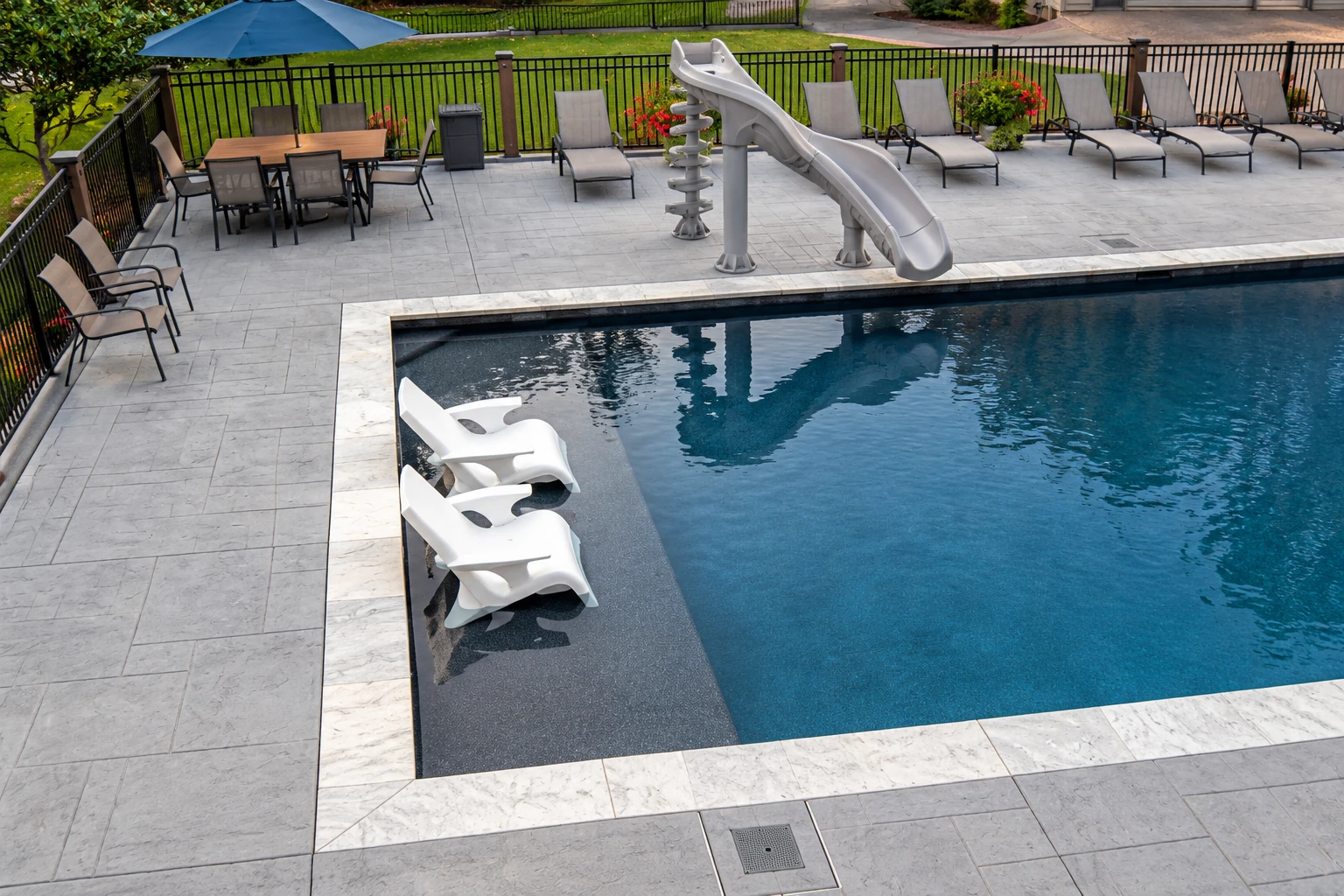
    A pool deck takes bare feet and splash water, so it needs grip and a slope that drains. We give it a textured finish for footing and set the fall away from the pool.

    Explore service
  • Concrete steps construction

    Houses set above the street often have front steps that have settled or pulled away from the porch. We rebuild them with steel inside and even risers, so every step feels the same.

    Explore service
  • Slab foundation building

    A new garage, studio or addition sits on a slab that has to carry the walls above it. We prepare the ground, set the forms and steel to the plans, then pour.

    Explore service
  • Foundation installation

    Older houses sometimes need a stretch of foundation replaced where the concrete has crumbled. We dig and form the new section from the plans and tie it into what stays.

    Explore service
  • Concrete parking lot building

    Shops and apartment buildings on the commercial streets need lots that take daily traffic without breaking up. We pour thicker slabs with steel inside and plan drainage so water doesn't sit in the stalls.

    Explore service
  • Concrete footings

    Decks, posts and small additions rest on footings, buried concrete that spreads the weight into firm ground. We dig them to the depth the plans call for and pour them in place.

    Explore service
  • Foundation raising

    When a corner of the house has dropped, doors stick and floors slope toward it. We look at why it settled before raising anything, then lift that side and set new concrete under it.

    Explore service
  • Concrete cutting

    Sometimes the job is a new opening, a trench for a drain line or one broken panel taken out cleanly. We saw-cut straight lines so the concrete that stays keeps a clean edge.

    Explore service

Working in El Cerrito: permits, licenses and what moves the price

Before any price, I find out which office covers your address and what it will want from the job. Here's how that plays out in El Cerrito, and what changes the cost and timing.

Who issues the permit and what to check

In El Cerrito, the city's Building Division issues building permits, checks the drawings and inspects the work. When your job needs a permit, that review and the inspection visits usually set the pace, so we build them into the schedule. We look up what the division wants before we price the job, then handle the application and set up the inspections with you.

You can check two things on any contractor before you sign. Ask for the state license number and look it up with the state licensing board, which the FAQ below covers. Then ask whether they hold an El Cerrito business license, because the city requires one of anyone doing business inside city limits, and a contractor applies for it before pulling a permit here.

  • The Building Division issues permits, reviews drawings and inspects the work.
  • We check what the division wants before we price your job.
  • Ask any contractor for a state license and El Cerrito business license.

What moves the price and the schedule

The price mostly follows the size of the slab and what's under it now. Breaking out and hauling away old concrete, digging down to firm ground, extra steel, a slope that needs a wall or steps, and a tight lot where we wheel concrete in by hand all add cost. A plain broom finish costs less than color or a stamped pattern.

The schedule turns on the permit, if one applies, and on curing, the days a new slab needs to harden before it takes feet and then tires. I come out, look at the ground and put the estimate in writing so you can compare it, the same way I do for jobs over in Orinda or Richmond.

  • Removal, base work, slope and access move the price most.
  • Color or a stamped pattern costs more than a broom finish.
  • The permit, if one applies, and curing set the schedule.

Get a free written estimate for your El Cerrito concrete job

Send the form or call (510) 345-1330, and we'll reply within one business day to set a time for me to come out to your El Cerrito property. I look at the job myself and give you a free written estimate, with no obligation and no pressure to book.

(510) 345-1330

What El Cerrito houses and lots ask of new concrete

Most of what makes a concrete job here easy or hard is out of sight, in the slope of the lot and the ground under the old slab. These are the conditions we plan for.

  • Driveways that climb from the street

    A driveway that climbs from the street needs grip for tires and a clean transition at the sidewalk so cars don't scrape. We set the slope with the street and the garage in mind, and give the surface a broom finish so it isn't slick when wet.

  • Old slabs poured on raked dirt

    When we break out an old driveway, we often find it was poured on loose dirt that was raked flat and never packed, which is usually why it sank. We dig to firm ground and pack the subgrade, the ground the slab sits on, because a slab is only as steady as what holds it up.

  • Water finding the low corner

    On lots that slope, water runs across a driveway or patio on its way downhill and finds the low corner. We check where it goes before we form anything and pitch the new slab away from the house, so water doesn't collect against your foundation.

  • Tight lots and narrow access

    Plenty of the lots we see sit close to the neighbors, with a narrow side yard and parked cars out front. When the truck can't reach the pour, we pump or wheel the concrete in, and we plan where the broken-out concrete goes so neighbors can still get past.

  • Cracks that show what failed

    Before we quote, I read the cracks in what you have now. A crack across a slab with no joint nearby usually means the joints were cut late or skipped, and a slab that's dropped at one end points to the base. That tells us what the new pour has to do differently.

How we run a concrete job from estimate to cleanup

I started J&L Berkeley Concrete Company, a concrete contractor in Berkeley, CA, in 2017 after learning the trade on an East Bay crew. Here's how we work and why.

I explain the job before we pour it

Concrete is hard to undo, so I'd rather talk a job through at the start than have you guess. At the estimate I'll sketch where the base goes, how deep we dig, where the water runs and where the joints get cut. You'll know what you're paying for, including the parts that end up buried.

I'll also tell you what concrete can't do. Nearly every slab cracks somewhere as it dries, so we cut control joints early enough to steer those cracks into straight lines you'll barely notice. We'd rather start a pour in the cooler part of the day than finish it in midday heat, because a slab that dries too fast ends up with a weak, dusty top.

  • I come out to every estimate

    I come out myself to look at every job and give the estimate, so the person pricing your driveway is the one running it. Our crew does the forming, pouring and finishing with me on the job, checking that what we talked about is what gets built.

  • Estimates in writing you can compare

    Your estimate comes in writing, with the base work, thickness, steel and finish spelled out. That way you can lay it next to another contractor's and see whether you're comparing the same job, not just two totals.

  • Licensed and fully insured

    We're licensed and fully insured, which matters on a job with heavy equipment and a crew working on your property. Ask about both at the estimate, and check the license yourself with the state board the way the FAQ below explains.

  • Your satisfaction, guaranteed

    That starts before the pour, because we walk the forms and the slope with you before any concrete arrives, and it's easier to move a line of stakes than a slab. Call (510) 345-1330 or send the form to set up a time.

Questions El Cerrito homeowners ask about concrete work

Homeowners in El Cerrito usually ask about permits, licenses and cost before a concrete job. Here are straight answers, and if yours isn't here, ask me at the estimate.

How do I find out if my concrete driveway or patio needs a permit in El Cerrito?

Ask the city's Building Division before work starts, which is what the city itself recommends. Its list of projects that need a building permit names foundation repairs, decks and pools but doesn't name driveways or patios, so the list alone won't settle it for flatwork, our word for slabs on the ground like driveways, patios and walks. You can reach City Hall at 510-215-4300, and we check with the division about your address and job before we price it.

How do I know if a concrete contractor needs a state license in California?

The state only skips the license requirement for minor work where the total contract price, labor and materials included, is under $500. Past that, the contractor needs a license from the Contractors State License Board. Ask for the license number before you sign and check it with the board yourself.

Does a new garage slab in El Cerrito need zoning clearance first?

Yes, the city lists garages, carports, additions and new homes among the projects that need zoning clearance, a check against the zoning rules, before the Building Division issues a permit. The Planning Division handles that part, looking at things like setbacks, the minimum distance from your property lines, and height limits. If your slab is for one of those, we plan for that step before we schedule the pour.

What affects the cost of a new concrete driveway in El Cerrito?

Most of the cost comes from taking out the old driveway, building the base under the new one and the finish you pick. If the budget's tight, I'd cut the finish before the base, because the base is buried on day one but it's what keeps the slab from sinking, and a plain broom finish on well-packed ground usually outlasts a fancy one on loose dirt. A permit, if one applies, adds fees and time, and your written estimate breaks out each part.

Service areas

We're based in Berkeley and work in the cities around it across the East Bay, including the ones listed here. If you don't see your city, call (510) 345-1330 or send the form and ask.

Ask about your location
(510) 345-1330Get an estimate